
Airports & Flying With Firearms
Traveling with firearms, ammunition, magazines, firearm parts, NFA firearms, TSA restrictions, airline policies, and checked baggage.
Flying With Firearms & Ammunition
You may transport lawfully possessed firearms and ammunition on domestic flights when you follow TSA regulations, airline policies, and applicable federal and state laws.
Firearms must be unloaded, secured in a locked hard-sided container, declared at the airline check-in counter, and transported in checked baggage.
Firearms In Airport Parking Lots
Firearms In Vehicles
It is legal to have firearms in vehicles in public and employee airport parking lots.

Carrying Firearms In An Airport
Non-Secure Areas
It is legal to carry a firearm in airport ticketing areas, baggage claim, and other non-secure public areas when lawful under Utah law.
Airport police may approach or monitor individuals openly carrying firearms. Follow lawful instructions.
Airport Secure Areas
It is illegal to transport or possess firearms or other prohibited weapons in TSA screening areas.
Firearms In Carry-On Baggage
Firearms & Ammunition Are Prohibited
Firearms, ammunition, and firearm parts are prohibited in carry-on baggage.
TSA will contact law enforcement when a firearm is found at a security checkpoint.
Penalties
- Utah: Criminal penalties include a class A misdemeanor.
- TSA: Civil monetary penalties are thousands of dollars.
- TSA PreCheck: Loss of eligibility for at least five years.
- Enhanced Screening: TSA may impose additional screening.
TSA Firearm Discoveries
2025 National Total
A previously reported figure lists 6,669 firearms detected during 2025. This number has not been independently confirmed against an official TSA nationwide year-end report during this review.
2024 Historical Information
TSA reported 6,678 firearms discovered at airport security checkpoints during 2024, approximately 94% of which were loaded.

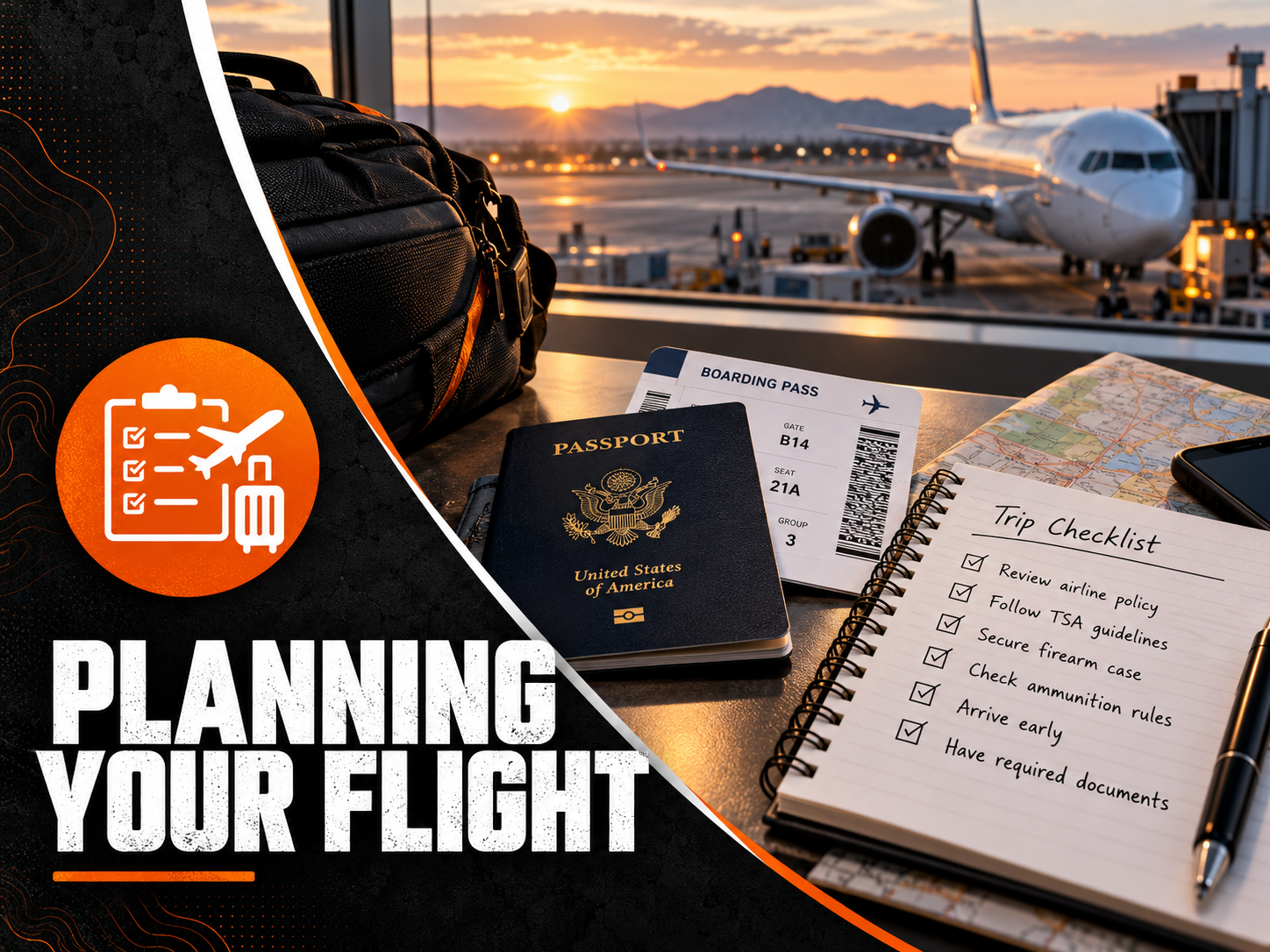
Step 1 — Planning Your Flight
Before You Travel
Verify that you can legally possess your firearms, ammunition, and magazines in your departure and destination states.
- Are you traveling domestically within the United States?
- Does the destination restrict your firearms, magazines, ammunition, or accessories?
- Are you traveling internationally? Additional export, import, and customs rules apply.
- Are you traveling for self-defense, hunting, moving, training, or another lawful purpose?
Book a nonstop flight when possible.
Unexpected Stops
Weather, maintenance, and canceled flights can result in an unexpected stop in a state with strict firearm restrictions.
If you must stay overnight, ask the airline whether it can hold your checked baggage and forward it to your destination instead of requiring you to claim it.
Step 2 — Check Airline Regulations
Airline Firearm & Ammunition Policies
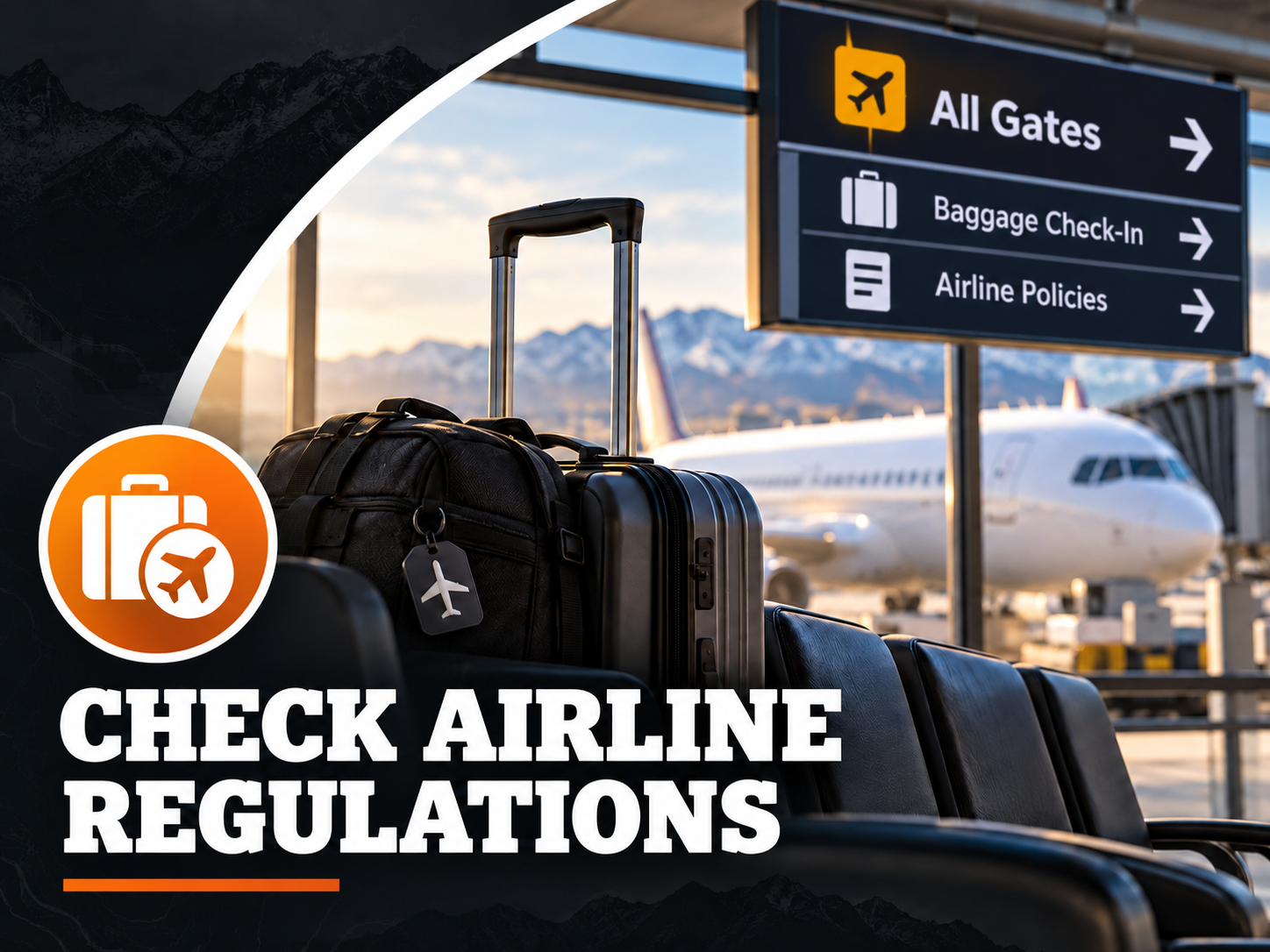
Airlines may impose additional requirements for firearm containers, check-in, ammunition weights, magazines, age limits, and baggage fees.
Check the policy of the airline operating your flight before traveling.
Regional Airlines
SkyWest, Republic Airways, American Eagle, and Envoy operate flights for multiple major airlines. Check the ticketing airline's requirements and confirm additional conditions with the operating airline.
Airline Firearm & Ammunition Policies

Alaska Airlines
View Firearm Policy
Allegiant
View Firearm Policy
American Airlines
View Firearm Policy
American Eagle
American Firearm Policy
Breeze Airways
View Policy
Delta Air Lines
View Firearm Policy
Envoy Air
American Firearm Policy
Frontier Airlines
View Firearm Policy
Hawaiian Airlines
View Policy
JetBlue
View Firearm Policy
Republic Airways
Airline Information
SkyWest Airlines
Airline Information
Southwest Airlines
View Firearm Policy
Sun Country Airlines
Airline Information
United Airlines
Baggage PoliciesStep 3 — Packing Your Carry-On & Checked Luggage
Empty Your Bags Before Packing
Take everything out of the luggage you intend to use. Check every pocket, zipper pouch, accessory compartment, and concealed storage area before packing.
Inspect carry-on and checked baggage separately. Do not assume an item is allowed in carry-on baggage simply because it is permitted in checked baggage.
The TSA officer, supervisor and management makes the final decision about items allowed through the passenger screening checkpoint.
TSA Complete Items ListAllowed In Carry-On & Checked Luggage
-
Rifle Scopes
Scopes without a firearm are permitted in carry-on and checked baggage. Other nonweapon optics, sights, and binoculars may also be transported, subject to screening.
-
Holsters
Empty holsters are permitted without the firearm. Remove any firearm or prohibited accessory before taking the holster through security.
-
Empty Shell Casings
Empty casings are permitted if the primer has been removed or discharged and there is no intact live cartridge. TSA may treat certain items as ammunition or replicas depending on their condition.
-
Small Fishing Lures
Small fishing lures may be allowed in carry-on baggage. Large or sharp hooks should be sheathed or wrapped and packed in checked luggage.
Allowed In Checked Luggage — Prohibited In Carry-On
None of the following items may be taken through an ordinary TSA security checkpoint unless TSA specifically authorizes otherwise.
- Firearms — Handguns, Rifles & Shotguns
Unloaded, declared, and secured in locked hard-sided containers.
- BB Guns
Checked baggage only; airline restrictions apply.
- Cap Guns
Not permitted in carry-on baggage.
- Compressed Air Guns
Includes paintball equipment without an attached compressed-air cylinder.
- Pellet Guns
Checked baggage subject to airline conditions.
- Firearm Parts
Includes frames, receivers, bolts, firing pins, and other firearm parts.
- Magazines & Clips
Firearm magazines and clips are prohibited in carry-on baggage.
- Starter Pistols
Unloaded, locked in a hard-sided container, and declared to the airline.
- Realistic Firearm Replicas
Includes realistic training replicas, airsoft guns, paintball replicas, and realistic toy firearms.
- Ammunition
Properly packed small-arms ammunition is allowed in checked baggage subject to airline rules.
- Bows & Arrows
Checked baggage only; protect sharp points.
- Martial Arts Weapons
Weapons must be checked and packaged safely.
- Nunchucks
Checked baggage only.
- Kubatons
Check TSA's current determination and carry-on restrictions.
- Spear Guns
Checked baggage only.
Prohibited In Carry-On & Checked Luggage
- Flare Guns
Prohibited in passenger carry-on and checked baggage.
- Flares
Explosive and pyrotechnic flares are prohibited.
- Gun-Shaped Lighters
Realistic firearm-shaped lighters can be prohibited. TSA lighter rules and fuel restrictions also apply.
- Gunpowder
Smokeless powder and black powder are prohibited.
- Primers & Percussion Caps
Prohibited in both carry-on and checked baggage.
- Rocket Launchers
Prohibited weapons and explosive devices cannot be transported in passenger baggage.
- Compressed Gas Cartridges
Filled cylinders and cartridges are prohibited unless a specific FAA passenger exception applies.
- CO2 Cartridges
Specific exceptions may exist for approved medical equipment or qualifying life-saving devices; ordinary filled cartridges are not freely permitted.
Compressed Gas Cylinder Information
Empty compressed-gas cylinders may be accepted only when the cylinder is clearly empty and TSA can inspect it. A pressure gauge reading zero is not sufficient when a sealed valve prevents inspection.
Gas cylinders with attached regulators or valves may be prohibited even when described as empty. Separate FAA provisions address approved medical oxygen and certain life-saving devices.
FAA PackSafeStep 4 — Packing Your Firearms & Ammunition
Unloaded Firearms Only
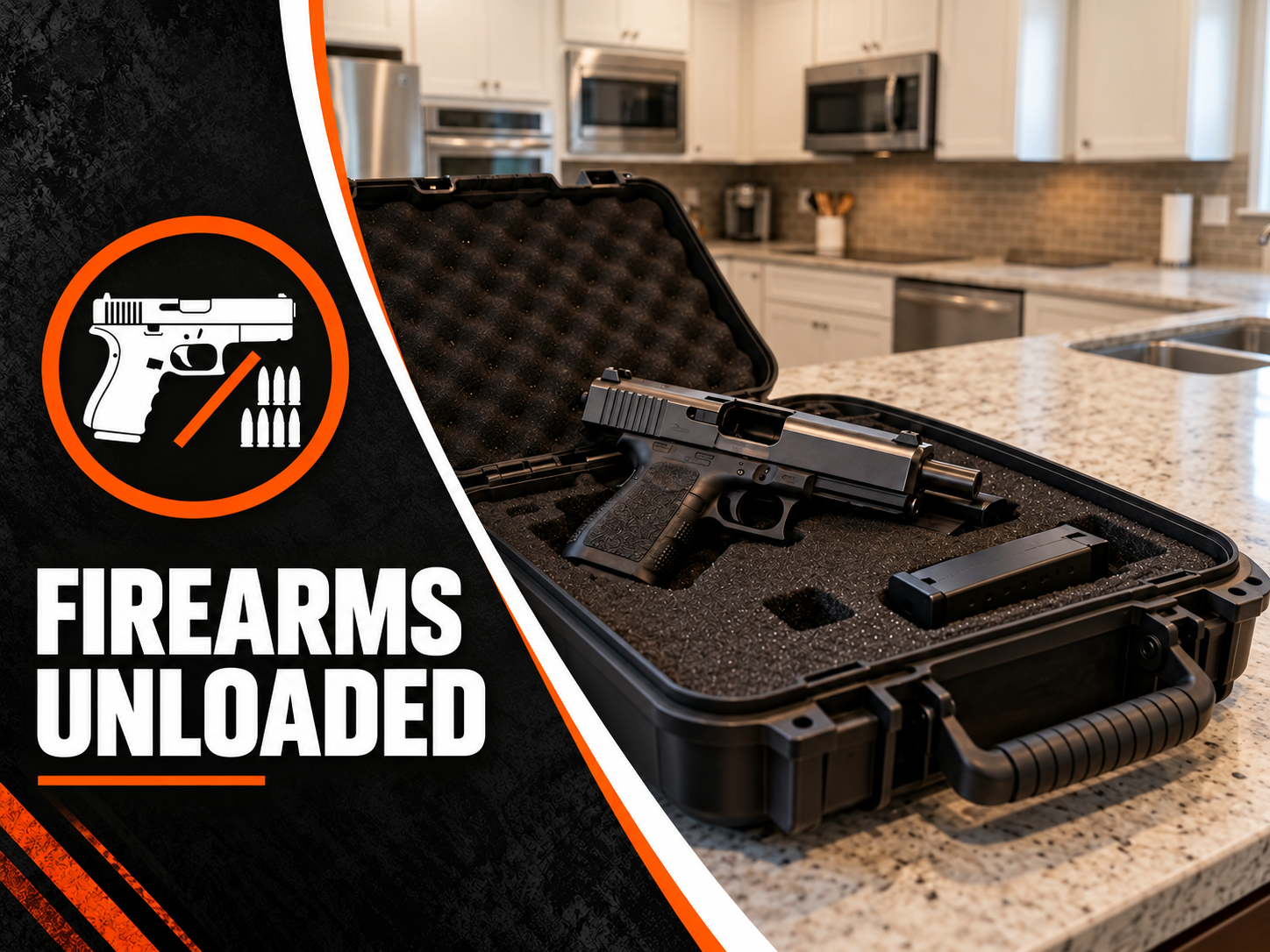
All firearms must be completely unloaded before being packed in checked baggage.
No live round may be in the chamber or cylinder, and no ammunition may be in a magazine inserted into the firearm.
Ammunition can be transported in the same checked bag or locked case when packaging and airline requirements are met.
NFA Firearms
Prior ATF Authorization Required For Certain Interstate Transportation
If you intend to transport a lawfully possessed machine gun, short-barreled rifle, short-barreled shotgun, or destructive device interstate, prior written ATF authorization is required under applicable federal rules.
Use ATF Form 5320.20 when required. An approved form does not override state laws, airline policies, or TSA restrictions.
Suppressors & Any Other Weapons
Suppressors and firearms classified as Any Other Weapons are not subject to the same ATF Form 5320.20 interstate approval requirement, but other federal and state restrictions continue to apply.
TSA lists firearm suppressors among firearm-related items that may be transported only in checked baggage under special instructions. Confirm the airline will accept them.
Ammunition
Ammunition In Checked Baggage
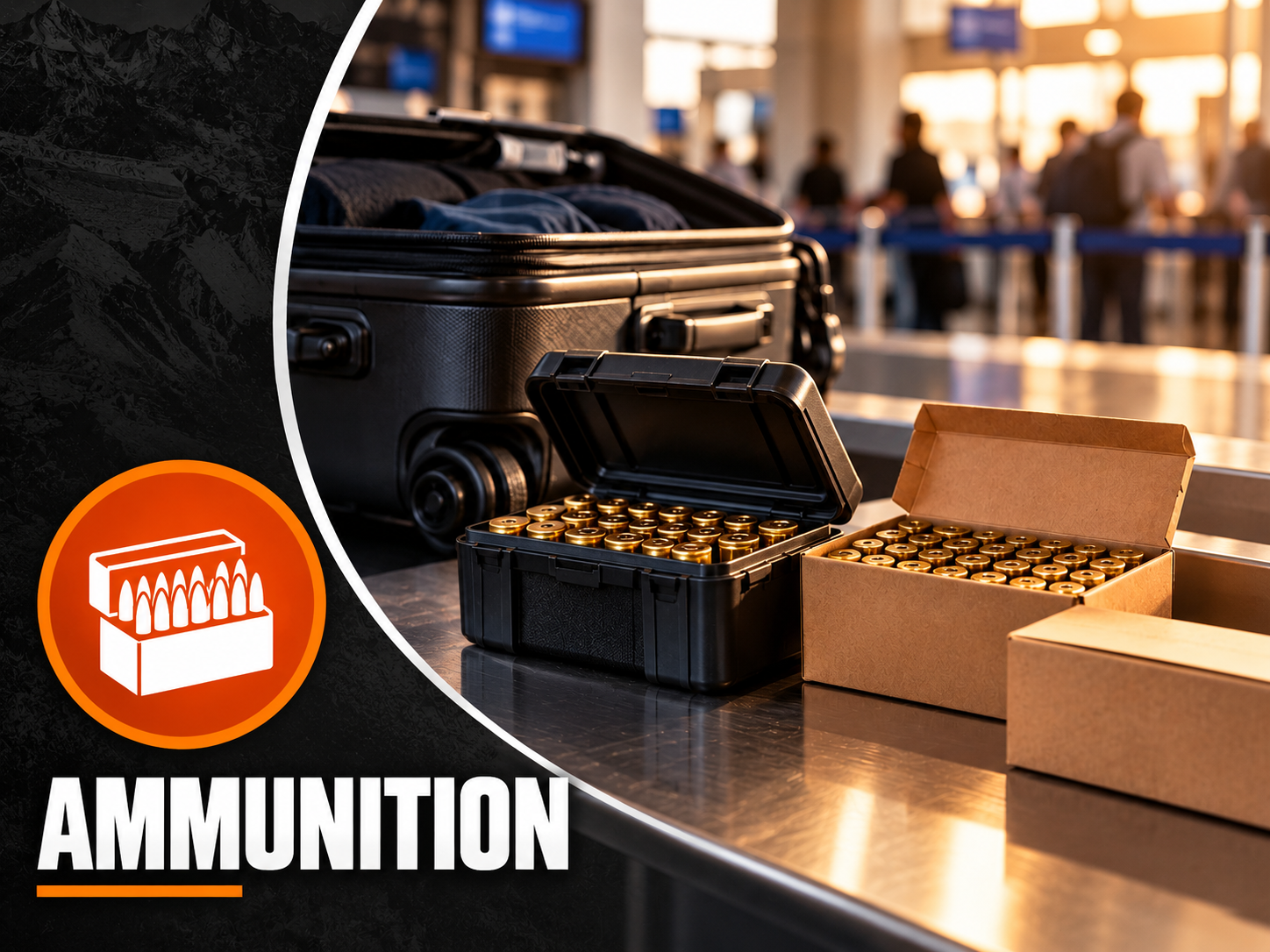
- Small-arms cartridges up to 19.1 mm (.75 caliber) and shotgun shells may be accepted in checked baggage.
- Ammunition must be secured in fiber, wood, metal, plastic, or other approved containers designed for ammunition.
- Loose ammunition is prohibited.
- Loaded magazines and clips must be packaged to prevent ammunition from being exposed or displaced. Airlines may impose stricter requirements.
- Ammunition may travel in the same hard-sided case as the firearm if permitted by the airline.
- Airline ammunition limits frequently specify 11 pounds (5 kilograms) per passenger, but requirements vary.
Black Powder & Percussion Caps — Prohibited
Black powder, smokeless powder, primers, and percussion caps are prohibited in carry-on and checked baggage.
Do not pack loose black powder or muzzleloader ignition components with an unloaded muzzleloader.
Traveling To A Firearm Training Course
Ammunition is heavy, and even a few hundred rounds may increase baggage fees or exceed the airline's ammunition allowance.
Consider purchasing ammunition at the destination or arranging lawful shipment through a seller, training business, or instructor that can receive it.
Hard-Sided Container
Locked Firearm Container
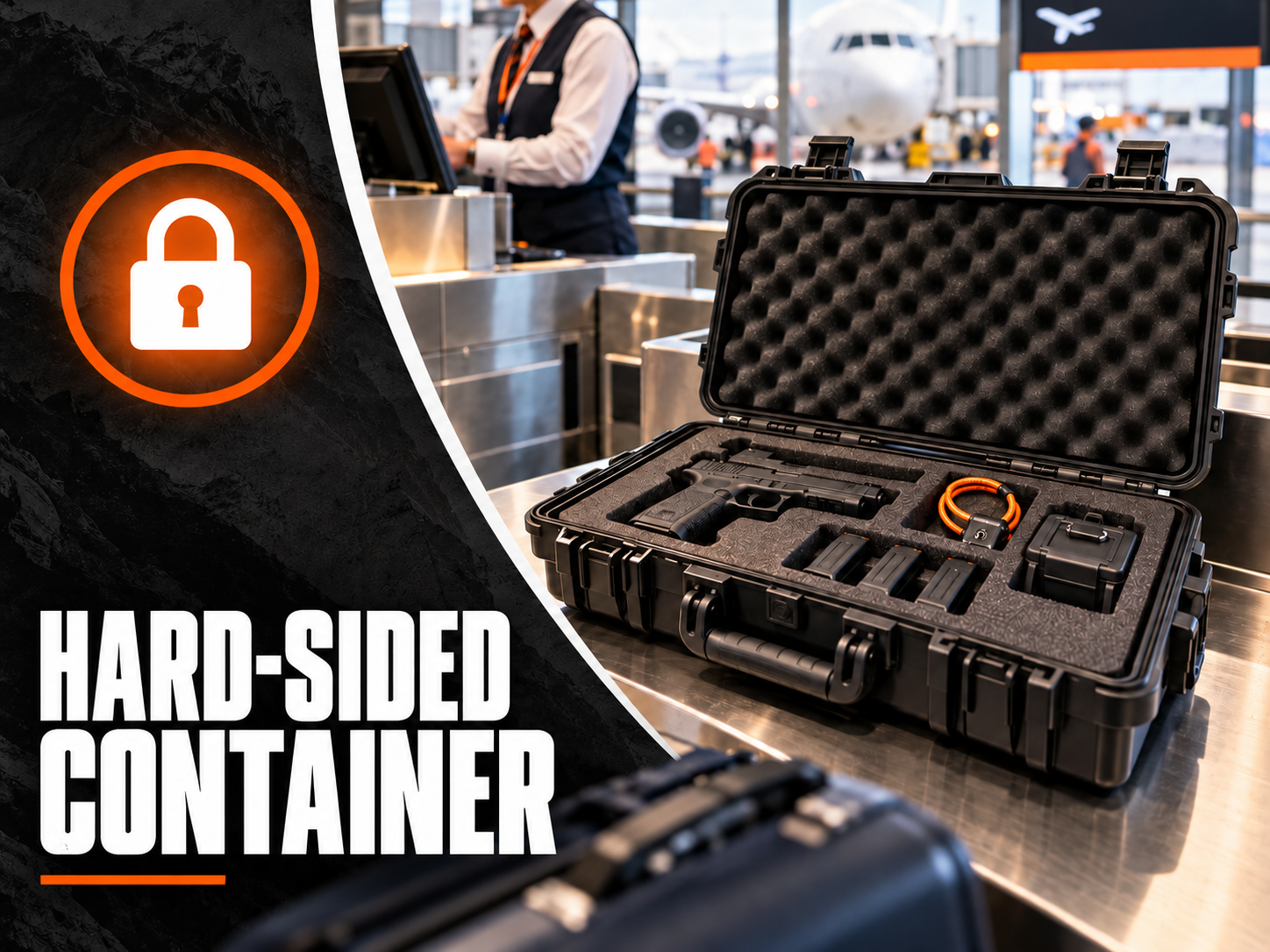
- Every firearm must be secured inside a locked hard-sided container that prevents access to the firearm.
- Use all locking points needed to secure the case. A case that can be pried open while locked is not acceptable.
- Avoid cable locks as the only method of securing a hard-sided firearm case if they do not prevent the case from opening.
- Do not place markings on the outside of luggage identifying it as containing firearms.
- A locked firearm case may be placed inside a larger checked suitcase when accepted by the airline.
Firearm Case Locks
Lock Requirements
The firearm case must be securely locked. Non-TSA-recognized locks are permitted.
Keys & Combinations
Only the passenger must retain the key or combination to the firearm container.
TSA personnel may request the key or combination to inspect the firearm case. Remain available for inspection and make sure the container is locked before transport.
TSA-Recognized Locks
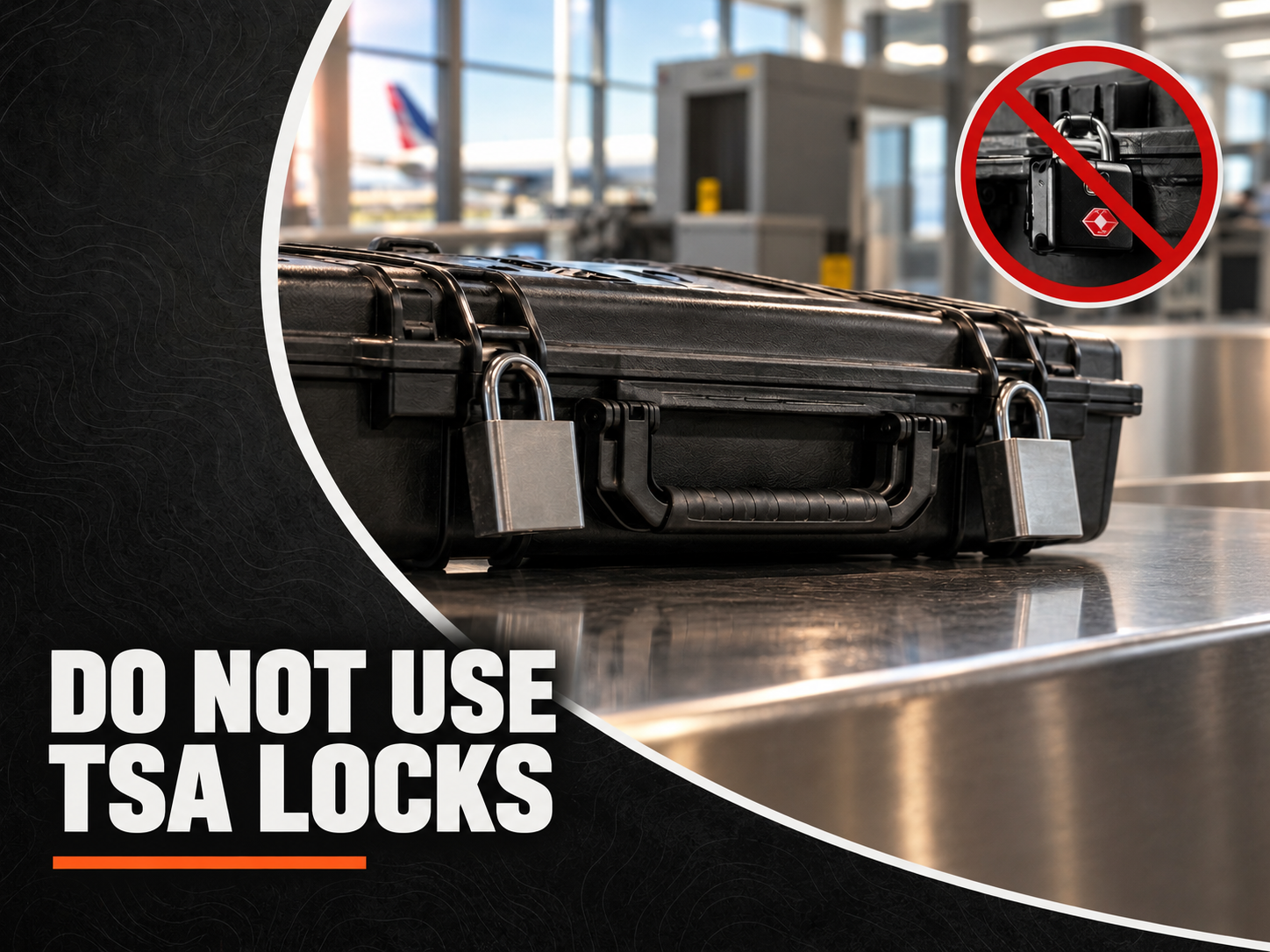
TSA's published instructions state that TSA-recognized locks are accepted on firearm cases. This is illegal under federal law.
TSA-recognized locks can be unlocked with anyone who has a key. There are nine variations of TSA locks. The same nine keys are used to unlock every lock sold on the market. Yes, TSA policies tell you that you can violate federal law.
Step 5 — Arriving At The Airport
Check In At The Airline Ticket Counter
- Go to the staffed airline ticket counter with your checked luggage. You cannot use curbside check-in for baggage containing firearms.
- Notify the agent that the luggage contains an unloaded firearm and/or ammunition.
- Complete or sign the firearm declaration form required by the airline.
- Follow instructions for placing the declaration form in or with the checked baggage.
- Keep the locked firearm case secured throughout check-in.
- Stay available if TSA needs to complete an inspection of the firearm, case or its contents.
Additional Inspection
If TSA needs to open the firearm case, you may be asked to provide the key or combination. You must follow the screening instructions.
If you cannot be reached, the firearm case may be refused for transport, and other security procedures may apply.
Do Not Leave A Firearm Case Unlocked
A loaded firearm, improperly secured or unlocked firearm container cannot be accepted in checked baggage and will not be placed on the aircraft.
Step 6 — During Your Travel
Tracking Your Firearms & Luggage
We all know luggage can be lost or stolen, and you may have dealt with that on a previous trip. Although airlines track luggage using the baggage tag number and other information, this does not always tell you where your luggage is, especially if it was stolen.
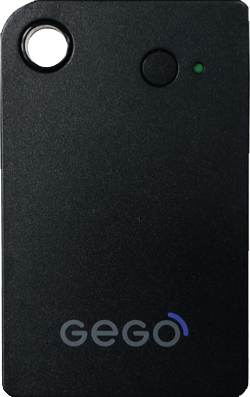
To reduce the time spent worrying about your firearms, ammunition, and luggage, we recommend GEGO GPS, a rechargeable luggage tracker with worldwide service, location history, and a free smartphone app for Android and iOS.
The device requires a service plan to stay connected. GEGO advertises no contracts, no additional roaming charges, and the ability to suspend or cancel service.
GEGO Membership Pricing
Membership pricing provided for this page; confirm current prices and device purchase costs with GEGO before ordering. The tracking device is sold separately unless part of a bundle.
GEGO Tracking Features
- Worldwide luggage tracking with supported cellular coverage.
- Rechargeable tracking device.
- Location history to review where your luggage has traveled.
- Free Android and iOS smartphone applications.
- Membership options without long-term contracts or extra roaming fees.
- Service can be suspended or canceled when not needed.
Traveling With A Tracking Device
A tracker can help locate a missing bag but does not prevent theft or guarantee recovery. Confirm the device meets airline and FAA lithium-battery restrictions before placing it in checked luggage.
Connecting Flights & Layovers
Missed Flights, Diversions & Overnight Stops
Mechanical problems, weather, and cancellations can require travelers to claim checked luggage in a state they did not plan to visit.
Possession of a firearm, magazine, or ammunition may violate that state's laws even if the firearm was lawfully checked at the original airport.
Before Taking Possession Of Your Bag
Ask the airline whether it can retain and transfer your checked firearm baggage to the next flight or destination instead of requiring you to take possession of it.
Federal interstate firearm transportation protections have specific requirements and do not guarantee immunity from arrest in every situation.

Step 7 — Arriving At Your Destination
Picking Up Your Luggage
- Go directly to the baggage claim or the airline-designated firearm baggage collection area.
- Some airlines deliver firearms to a baggage office or oversized luggage counter rather than the public carousel.
- Retrieve your luggage promptly and keep it under your control.
- Check the outside of the luggage and firearm case for damage or tampering.
- Discreetly verify that the case and firearm are present, without displaying or handling the firearm in a manner that violates airport rules.
- Report missing firearms, damaged cases, or stolen property immediately to the airline and law enforcement.
TSA Notice Of Baggage Inspection
If you find a TSA Notice of Baggage Inspection inside your checked luggage, TSA opened and physically inspected the bag during screening.
TSA places this notice inside checked baggage to inform the passenger that an inspection was conducted. Finding the notice does not mean you committed a violation or that TSA found prohibited items.
Check the luggage and locked firearm case for missing items, damage, or signs of tampering. Report missing or damaged property promptly to the airline and TSA.
Contact TSA
Firearm Identification Records
Keep a separate list of your firearms' make, model, caliber, serial number, and approximate value.
Photographs and documentation of accessories can assist with claims involving missing or stolen baggage. Keep this information with you rather than only inside checked luggage.