
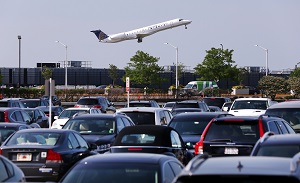
Firearms In Parking Lots
It is LEGAL to have firearms in a vehicle in all public and employee parking lots of an airport.
See additional important information about firearms in vehicles and parking lots.
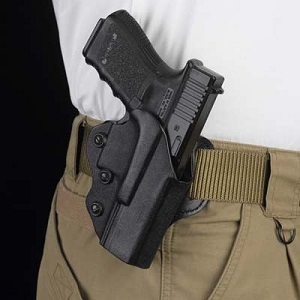
Carrying Firearms In An Airport
It is LEGAL to carry a firearm in an airport to the airline ticket counters, baggage claim, and other non-secure areas. Although it is legal, use common sense given past attacks and heightened threats to airports, airlines, airplanes, and people. You may be closely monitored and/or approached by airport police to ensure everyone’s safety.
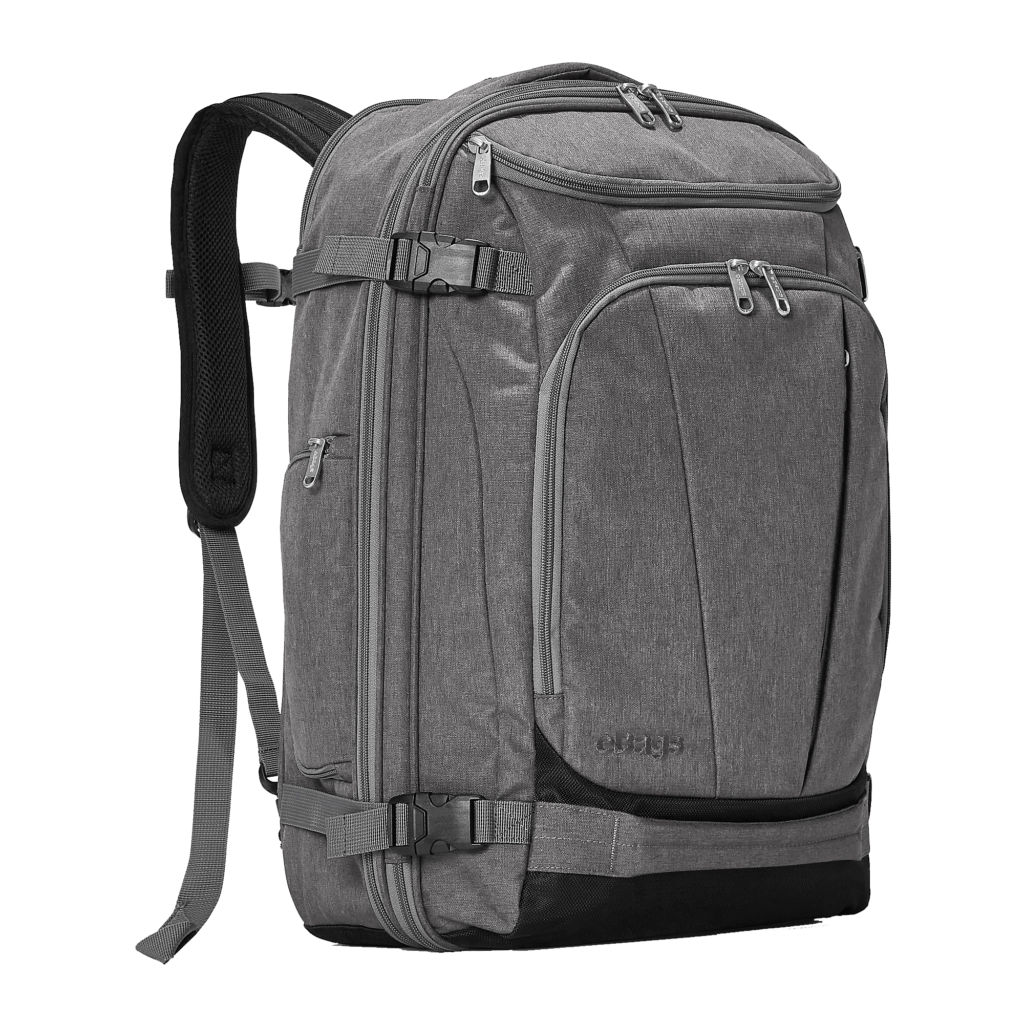
Firearms In Carry On Baggage
It is ILLEGAL to possess any dangerous weapons, firearms, or explosives in any airport secure area as described in 53-5a-102.2 (2)(a)(v), (b)(v), and (c)(v), 76-8-311.1, and 76-11-218.
The Transportation Security Administration (TSA) defines a loaded firearm as a firearm that has a live round of ammunition, or component thereof, in the chamber or cylinder, in a magazine inserted in the firearm, when a firearm and its ammunition are located in the same bag, or when a person has both accessible; both a firearm and ammunition regardless of whether the firearm or ammunition is on their person and/or in their accessible baggage. For purposes of this section, if an individual has a firearm in their accessible baggage and ammunition in their pocket or any combination where the individual has access to both, the firearm is considered “loaded.”
Utah Penalties:
- Class A Misdemeanor if you knowingly or intentionally possess a firearm, or
- Infraction (a minor offense like a traffic ticket) if you recklessly or with criminal negligence possess a firearm
TSA Penalties:
- A civil penalty of up to $17,062 per violation per person may include an arrest. See the TSA Civil Enforcement for more information
- If you are a TSA Pre✓® member, you will lose your status for 5 years
- May require enhanced screening
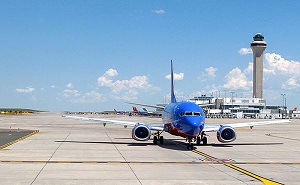
Flying With Firearms & Ammunition
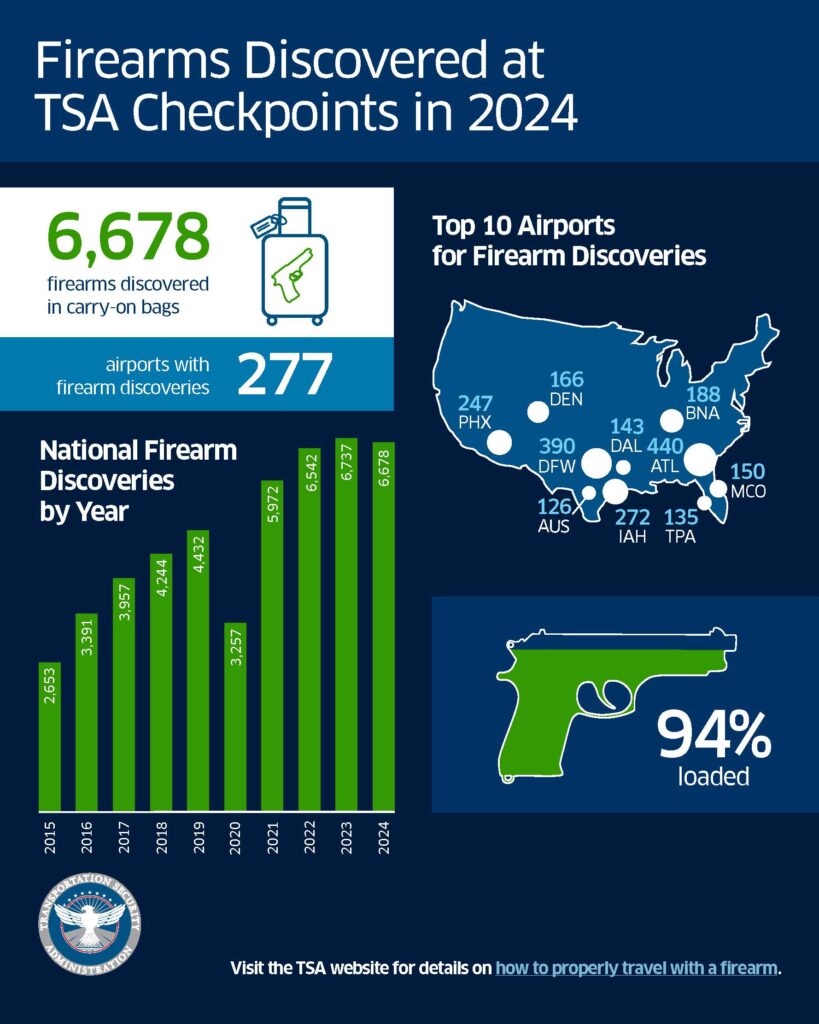
In 2024, TSA stopped 6,678 firearms, and 94% were loaded
You must be at least 18 years old to transport firearms, ammunition, and NFA firearms
Transporting firearms and ammunition while flying is not as difficult as many people make it sound. Yes, you must meet strict requirements from the Transportation Security Administration (TSA), airline regulations, and all State and Federal laws, but we have handled all the work for you.
Following the steps described below will help ensure you get your firearms and ammunition to your destination safely.
Step 1 ‐ Planning Your Flight

If you want to take a firearm on your trip, you must ensure you have the best information available to make sure you travel with your firearm correctly.
Ask yourself these questions:
- Am I traveling domestically (within the U.S.), and does the state I am traveling to have any restrictions on firearms, ammunition, magazine capacity, or other items?
- Am I traveling internationally (outside the U.S.)? There are very strict laws and requirements for taking firearms and ammunition to other countries.
- Am I taking the firearm for self-defense, hunting, moving, a firearms training course, etc.?
When possible, try to fly nonstop to your destination. Even if you do not have any planned layovers, stops, or intentions of being in a particular state, you must take into consideration the possibility that, for any reasons out of your control, such as a mechanical issue with the plane, bad weather, etc., you may be diverted to a different airport in a state that has very stict firearm laws such as California, Connecticut, Hawaii, Illinois, Maryland, Massachusetts, New Jersey, New York, Washington D.C., etc. If you plan to have layovers or stops, or understand that flights may be delayed or canceled, it can become a nightmare. The issue occurs if you have to pick up your checked luggage at the baggage claim. You may have to spend the night and take the firearm from the airport to the hotel, then back to the airport again. Given ridiculous laws that some states have, there is a chance that your firearm, ammunition, and/or magazine could be illegal in that state, and you may be arrested, even if it’s not your fault.
Federal law, USC 926 A. Interstate transportation of firearms, is supposed to protect you when traveling from point A to point B without any problems, as long as you are legally allowed to have the firearm and the firearm/item itself is legal from your departure point to your destination. However, because states can enact laws more restrictive than federal laws, this can cause problems.
If you have to stay the night in a state with any restrictions on firearms and/or ammunition in your luggage, ask the airline if they can hold your luggage and forward it to the appropriate destination before you claim your bag or take it out of the airport.
Step 2 ‐ Check Airline Regulations

The following are major airline carriers in the United States. Click on the airline image to view their firearm and ammunition policies.
Note: There are many other small airline companies in the United States. If you are flying using an airline that is not listed below, please visit the specific airline’s website or contact them for additional information about traveling with firearms and/or ammunition aboard their aircraft.











Additional Airlines

SkyWest operates with United Airlines, Delta Airlines, American Airlines, and Alaska Airlines

Republic Airways operates with United Airlines, Delta Airlines, American Airlines


American Eagle & Envoy operate under American Airlines

Virgin America operates under Alaska Airlines
Step 3 ‐ Packing Your Carry-On & Checked Luggage
Take everything out of the bag(s) you are taking on your trip. Check ALL pockets, zipper pouches, etc. to ensure you do not have any prohibited items BEFORE you start packing your luggage.
Allowed In Carry On & Checked Luggage
- Rifle Scope (Scope Only) This includes all optics, sights, and binoculars
- Holsters (obviously without the firearm in it)
- Shell Casings – Empty shell casings are allowed in a carry-on bag as long as the projectile is no longer intact. They are allowed only if the primer has been removed or has been discharged. If the projectile is attached & the powder has been drilled out, it is considered a replica and not allowed in carry-on.
- Small Fishing Lures – Sharp fishing tackle that may be considered dangerous, such as large fish hooks, should be sheathed, securely wrapped, and packed in your checked luggage. Like other high-value objects, you may wish to pack expensive reels or fragile tackle that does not pose a security threat (small flies) in your carry-on baggage.
The final decision rests with the TSA officer on whether an item is allowed through the checkpoint.
TSA controls the final decision on whether an item is allowed through the checkpoint.
Allowed In Checked Luggage | Prohibited In Carry-On Luggage
None of these items are allowed into or past the security checkpoint!
- Firearms, BB Guns, Cap Guns, Compressed Air Guns, Pellet Guns,
- Parts of Guns and Firearms – Firearm Parts, Including Frames, Receivers, Magazines, Clips, Bolts, And Firing Pins.
- Starter Pistols
- Realistic Replicas of Firearms Including Plastic Training Firearms, Airsoft, Paintball, Or Toy Firearms.
- Ammunition, ammunition parts including bullets, casings, and projectiles.
- Bows and Arrows
- Martial Arts Weapons
- Nunchucks
- Kubatons
- Spear Guns
Prohibited In Carry-On & Checked Luggage
- Flare Guns & Flares
- Gun Lighters
- Gun Powder – This Includes Black Powder, Primers, And Percussion Caps
- Rocket Launcher
- Small Compressed Gas Cartridges
Except for personal medical oxygen cylinders, you can only carry an EMPTY compressed gas cylinder onboard a plane. To be permitted (in either carry-on or checked baggage), it must be clearly visible to the TSA officer that the cylinder is empty. Personal oxygen is permitted if the regulatory valve has not been tampered with or removed.
Unless used for personal medical oxygen, the gas cylinder regulator valve must be completely disconnected from the cylinder (i.e., the cylinder must have an open end that allows the TSA officer to visually inspect the cylinder). TSA officers will NOT remove the seal or regulator valve from the cylinder. If the gas cylinder is sealed (i.e., the regulator valve is still attached) and not required for personal medical oxygen, it is prohibited, regardless of the pressure gauge reading. - CO2 Cartridges (Allowed Only For Medical Purposes And Life Vests)
See all items allowed and prohibited in TSA’s What Can I Bring?
Step 4 ‐ Packing Your Firearms & Ammunition

Hard-Sided Container
- All firearms and ammunition must be locked in a hard-sided container that completely prevents access. If the case has three lock holes, put a lock in ALL three places. Cases that can be easily opened, even if they have a lock, are not permitted. We also recommend avoiding cable locks to secure the hard case.
- Do not have anything on the outside of your checked luggage that shows that it contains a firearm.
Firearm Condition
- ALL firearms must be unloaded as defined by Federal law.
49 CFR 1540.5 says, “Loaded firearm means a firearm that has a live round of ammunition, or any component thereof, in the chamber or cylinder or in a magazine inserted in the firearm.” The explanation above of what TSA considers a loaded firearm does not apply to checked baggage, since the firearm and ammunition can be in the same locked container.
This means you cannot have ANY ammunition in the firearm!
Ammunition
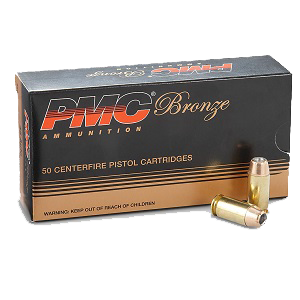
- Ammunition must be packed in fiber (such as cardboard), wood, or metal boxes, or other packaging that is specifically designed to carry small amounts of ammunition. TSA does not specify how much constitutes a “small amount,” but most airlines do have additional baggage weight restrictions.
- Small arms ammunition, including ammunition not exceeding .75 caliber and shotgun shells of any gauge, may be carried in the same hard-sided case as the firearm. Individual airlines may establish more stringent requirements, and some may want it packed in a different hard-sided case from the firearm.
- Firearm magazines and ammunition clips, if loaded, must completely and securely enclose the ammunition. Something must securely cover the exposed portions of the ammunition, or the magazine/clip must be securely placed in a pouch or holder. Additional airline restrictions may apply.
NOTE:
If you are flying to attend a training course, ammunition is heavy. With luggage weight limits and restrictions for the number of bags, flying with as little as 200 rounds of ammunition can mean additional baggage fees. A far more reasonable option may be to purchase your ammunition at your destination or online and have it shipped there. Contact the training company or instructor to ask about shipping ammunition accommodations. The training company or instructor may also have ammunition available for purchase.
NFA Firearms:
- If you are traveling out of state and you want to transport your legally owned short-barreled rifle, short-barreled shotgun, machine gun, or destructive device, you are required to have prior written authorization from the ATF as stated in USC 922(a)(4). See Transporting & Moving With An NFA Firearm for more information.
If you do not have approval from the ATF, you CANNOT take the NFA firearm!
The ATF approval only authorizes the transportation of the NFA weapon(s). All local, state, and federal laws and regulations still apply.
Silencers & Any Other Weapons (AOW): While this form is not needed for transporting suppressors and items defined as Any Other Weapon (AOWs), it is still a good idea to have one for them.
Confusion:
The TSA website says, “Only the passenger should retain the key or combination to the lock unless TSA personnel request the key to open the firearm container to ensure compliance with TSA regulations. You may use any brand or type of lock to secure your firearm case, including TSA-recognized locks.”
This can cause serious issues because TSA’s statement is inconsistent and appears to violate Federal law.
The statement above is similar to Federal law 49 CFR 1540.111 (c)(2)(iv), which says, “The container in which it is carried is locked, and only the passenger retains the key or combination.”
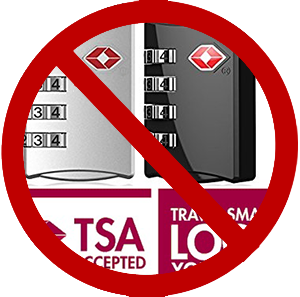
The problem with what the TSA says is that TSA-recognized locks can be purchased from many different online and retail businesses. All TSA locks are opened with the same keys! Therefore, anyone with a TSA-recognized lock key could unlock the case containing your firearm, and you would be violating Federal law that states “only the passenger retains the key or combination.”
DO NOT use a TSA-recognized lock. Use a padlock or combination lock and do not give anyone a key or the combination.
Step 5 ‐ Arriving At The Airport
You cannot use the “curb check-in” for any luggage containing a firearm or ammunition.
- All luggage that contains a firearm and/or ammunition must be checked at the airline ticket counter.
- You must notify the ticket agent that you have a firearm and/or ammunition in your luggage. A good way to communicate this without causing panic is to quietly tell the agent, “My checked luggage contains an unloaded firearm and/or ammunition, which complies with Federal law, TSA regulations, and your airline’s policies.”
- The ticket agent will have you sign a Firearm Declaration Form indicating your firearm is unloaded. If the case is a large rifle case, place the form inside the case with the firearm and/or ammunition. If the case is a small pistol case, place the form inside the luggage. Please lock your luggage so no one can access the hard case.
- After the airline takes your luggage and places it on the conveyor belt, or if you have to take it to a TSA luggage check area, we highly recommend that you wait near the ticket counter for 10 to 15 minutes while it travels through the baggage system, is processed by the X-ray machine, and is cleared.
- If a Transportation Security Officer (TSO) needs to open your luggage to inspect an item or has suspicion that the firearm is loaded and must verify the firearm is unloaded, you must unlock the hard-sided case. If you are not present, TSA and/or the airline may make a reasonable attempt to contact you. If you are unavailable or do not respond, TSA will cut all locks or not accept the luggage.
- Federal law prohibits the transportation of unlocked gun cases (or cases with broken locks) on aircraft. Your firearm will not be allowed on the aircraft and will be turned over to law enforcement.
Once your baggage is cleared, you can go through the security checkpoint. If TSA opens your luggage for any reason and you are not present, they must put a Notice of Inspection inside.
Step 6 ‐ During Your Travel
Luggage Tracking
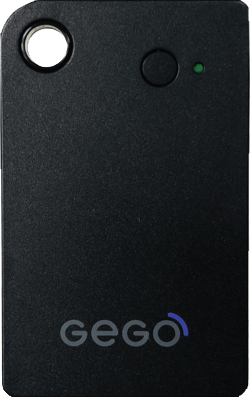
We all know that luggage can be lost or stolen; unfortunately, you may have had to deal with that on a previous trip. Although each airline can track your luggage using your tag number and/or other information, it is not a reliable way to know where your luggage is, especially if it was stolen. To reduce time spent worrying about your firearms, ammunition, and/or luggage, we recommend using a great luggage-tracking product called GEGO GPS. It does require a service plan to stay connected, but there are no contracts; you can suspend or cancel the service at any time, and there are no extra roaming charges. The device works worldwide, is rechargeable, shows location history, and has a free smartphone app available on both Android and iOS. They have two plans: a 1-year membership for $119.88 and a monthly membership for $14.99.
You may also want to look into insurance policies that cover lost luggage and/or firearms.

Connecting Flights / Layovers
When you have a connecting flight or layover, your luggage should automatically be routed to the connecting flight. Sometimes, however, due to mechanical reasons, your flight is diverted and forced to land at an airport in a state you did not intend to go to. You may have to claim your luggage and take it to another terminal, stay in a hotel room, or even travel to another airport before continuing to your destination.
It is essential to understand that while federal law is supposed to protect you, some states often ignore this law and charge innocent travelers with felony crimes. If you end up in one of these states, have a firearm in your checked luggage, and the airline requires you to pick up your luggage, we highly recommend speaking with an airline representative or a local police officer before attempting to take possession of it.
Step 7 - Arriving At Your Destination & Picking Up Your Luggage

When you arrive at your destination, go directly from the plane to the baggage claim and position yourself where the luggage emerges on the carousel. You want as few people as possible between you and your baggage to prevent it from being stolen.
- If your luggage does not arrive, it may be airline policy to take it to the airline’s baggage office, oversized luggage area, or overweight area. You may or may not be asked to provide identification to retrieve your luggage.
- Before leaving the area, find a discreet spot and, without causing alarm, always check the contents of your luggage as soon as possible after arrival to ensure nothing has been stolen or tampered with. Open your bag and visually confirm that the hard case is still in your luggage and that none of the locks or the case itself has been tampered with. If there are signs of tampering, make sure you open the case immediately to confirm your firearm(s) and/or ammunition is/are accounted for. NEVER take the firearm(s) and/or ammunition out of the case.
- Report any missing and/or stolen baggage or item(s) immediately to the airline. It’s a good idea to have a Firearms Identification Card listing the make, model, caliber, serial number, and value of all firearms you are transporting. It can also list any modifications made to the firearm and its accessories, such as the number of magazines, holsters, and rounds of ammunition. Keep the list on your person, not in any luggage. Pictures can also help.
TSA Fine Schedule
The Maximum Fine Amount Is $17,062


Fines increase almost every year. You must ensure you do not have any prohibited items in your carry-on or checked luggage. TSA may impose civil penalties of up to $17,062 per violation per person. Repeated violations will result in higher penalties.
- See the TSA Enforcement Sanctions Guidance Policy for a detailed list of the penalty guidelines.
- See the Civil Enforcement for the penalties and fines for violating TSA regulations.
For additional information, you can download the TSA Fact Sheet, find out what is a prohibited item, read the TSA website for transporting firearms and ammunition, view items discovered in baggage, which is updated weekly on the TSA Blog, or contact the TSA Contact Center with questions you have regarding TSA firearm regulations and for clarification on what you may or may not transport in your carry-on or checked baggage.
State Laws
- 53-5a-102.2 Open and concealed carry of a firearm outside of an individual’s residence.
- 76-8-311.1 Establishment of secure areas — Items prohibited — References to penalty provisions.
- 76-11-218. Possession of a dangerous weapon in an airport secure area — Reporting requirements.
- 77-11a-402. Disposition of seized property and contraband — Return of seized property.
- 77-11b-102. Property subject to forfeiture.
- 77-11b-105. Disposition of unclaimed property.
- 77-11d-101. Definitions.
Federal Laws
18 U.S.C. 922 Unlawful acts
(e) It shall be unlawful for any person knowingly to deliver or cause to be delivered to any common or contract carrier for transportation or shipment in interstate or foreign commerce, to persons other than licensed importers, licensed manufacturers, licensed dealers, or licensed collectors, any package or other container in which there is any firearm or ammunition without written notice to the carrier that such firearm or ammunition is being transported or shipped; except that any passenger who owns or legally possesses a firearm or ammunition being transported aboard any common or contract carrier for movement with the passenger in interstate or foreign commerce may deliver said firearm or ammunition into the custody of the pilot, captain, conductor or operator of such common or contract carrier for the duration of the trip without violating any of the provisions of this chapter. No common or contract carrier shall require or cause any label, tag, or other written notice to be placed on the outside of any package, luggage, or other container that such package, luggage, or other container contains a firearm.
18 U.S.C. 921. Definitions
Defines firearms, ammunition, etc.
18 U.S.C. 926A. Interstate transportation of firearms
Notwithstanding any other provision of any law or any rule or regulation of a State or any political subdivision thereof, any person who is not otherwise prohibited by this chapter from transporting, shipping, or receiving a firearm shall be entitled to transport a firearm for any lawful purpose from any place where he may lawfully possess and carry such firearm to any other place where he may lawfully possess and carry such firearm if, during such transportation the firearm is unloaded, and neither the firearm nor any ammunition being transported is readily accessible or is directly accessible from the passenger compartment of such transporting vehicle: Provided, That in the case of a vehicle without a compartment separate from the driver’s compartment the firearm or ammunition shall be contained in a locked container other than the glove compartment or console.
49 CFR 1540.5 Terms used in this subchapter.
Loaded firearm means a firearm that has a live round of ammunition, or any component thereof, in the chamber or cylinder or in a magazine inserted in the firearm.
49 CFR 1540.111 Carriage of weapons, explosives, and incendiaries by individuals.
(a) On an individual’s person or accessible property—prohibitions. Except as provided in paragraph (b) of this section, an individual may not have a weapon, explosive, or incendiary, on or about the individual’s person or accessible property—
(1) When performance has begun of the inspection of the individual’s person or accessible property before entering a sterile area, or before boarding an aircraft for which screening is conducted under this subchapter;
(2) When the individual is entering or in a sterile area; or
(3) When the individual is attempting to board or onboard an aircraft for which screening is conducted under §§1544.201, 1546.201, or 1562.23 of this chapter.
(b) On an individual’s person or accessible property—permitted carriage of a weapon. Paragraph (a) of this section does not apply as to carriage of firearms and other weapons if the individual is one of the following:
(1) Law enforcement personnel required to carry a firearm or other weapons while in the performance of law enforcement duty at the airport.
(2) An individual authorized to carry a weapon in accordance with §§1544.219, 1544.221, 1544.223, 1546.211, or subpart B of part 1562 of this chapter.
(3) An individual authorized to carry a weapon in a sterile area under a security program.
(c) In checked baggage. A passenger may not transport or offer for transport in checked baggage or in baggage carried in an inaccessible cargo hold under §1562.23 of this chapter:
(1) Any loaded firearm(s).
(2) Any unloaded firearm(s) unless—
(i) The passenger declares to the aircraft operator, either orally or in writing, before checking the baggage, that the passenger has a firearm in his or her bag and that it is unloaded;
(ii) The firearm is unloaded;
(iii) The firearm is carried in a hard-sided container; and|
(iv) The container in which it is carried is locked, and only the passenger retains the key or combination.
(3) Any unauthorized explosive or incendiary.
(d) Ammunition. This section does not prohibit the carriage of ammunition in checked baggage or in the same container as a firearm. Title 49 CFR part 175 provides additional requirements governing carriage of ammunition on aircraft.