State-Made Firearms Protection Act
Utah's law concerning firearms manufactured and kept in Utah, and the federal court decisions affecting its enforcement.
Utah State-Made Firearms Protection Act
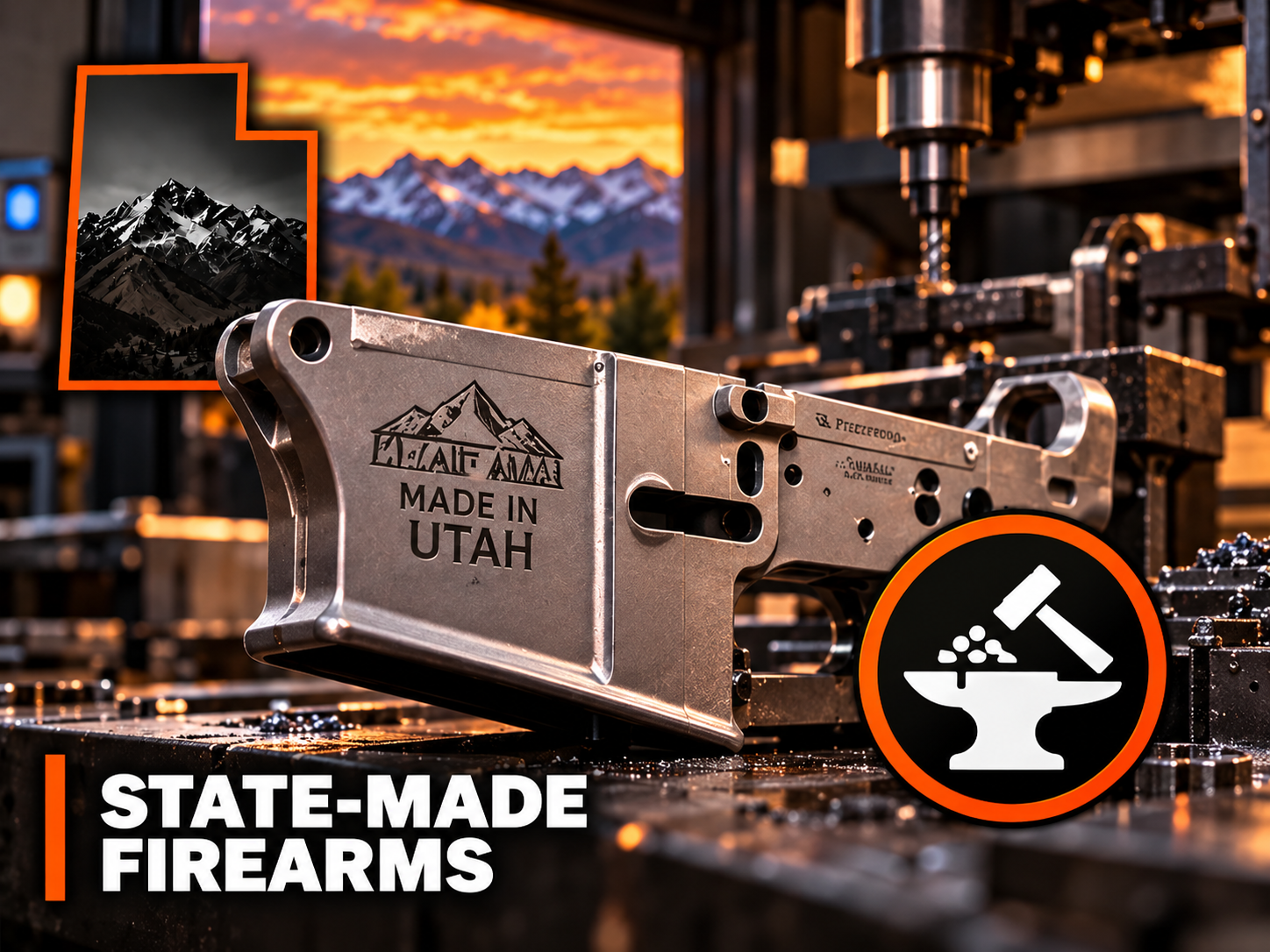
The Utah State-Made Firearms Protection Act was passed in 2010. It addresses the legal status of firearms and firearm-related items manufactured in Utah for use within Utah.
Utah's statute declares that certain firearms, firearm accessories, and ammunition manufactured and remaining in Utah are not subject to federal firearms laws under Congress's interstate commerce authority.
Federal Firearm Laws Still Apply
Utah's statute does not prevent federal prosecution for violating federal firearm laws. Federal courts have rejected similar arguments that firearms made and retained entirely within a state are exempt from federal regulation.
Do not manufacture, sell, transfer, or possess firearms in violation of federal law based on the assumption that Utah's state-made firearm statute provides immunity.
What The Utah Law Covers
Manufactured And Kept Within Utah
The law addresses firearms and related items manufactured in Utah and retained within the state's borders. Its provisions include legal considerations, intrastate manufacturing, and required markings.
It draws a distinction between items manufactured within Utah and items that move through interstate commerce, while asserting Utah's legal position concerning intrastate firearm manufacturing.
States With Similar Laws
Other states that have enacted comparable firearm-freedom or state-made firearm protection laws include Alaska, Arizona, Idaho, Kansas, Montana, South Dakota, Tennessee, and Wyoming.
Utah's legislation was modeled after Montana's Firearms Freedom Act.
Why You Should Be Careful About Building Your Own Firearms
Montana Shooting Sports Association v. Holder — 2013
A federal court rejected the argument that Montana's Firearms Freedom Act exempted firearms manufactured and kept entirely in Montana from the federal Gun Control Act.
The case involved Gary Marbut and challenges to federal firearm regulations. The federal appellate court upheld the federal government's authority to regulate covered firearms under the Commerce Clause.
Result: A firearm's manufacture and retention within one state do not, by themselves, remove it from federal firearm regulation.
United States v. Cox And Kettler — Kansas
Federal prosecutors brought charges involving unregistered firearms and silencers despite Kansas's Second Amendment Protection Act.
Shane Cox was convicted of multiple federal offenses arising from manufacturing and transferring unregistered firearms, including silencers. Jeremy Kettler was convicted of unlawful possession of an unregistered silencer under the federal law in effect at the time.
Result: The Kansas statute did not protect the defendants from federal prosecution. The decisions demonstrate the legal risk of relying on state firearm-freedom laws to disregard federal requirements.
Making Firearms For Personal Use
Personal Manufacture
Federal law distinguishes lawful personal manufacture from engaging in the business of manufacturing firearms. A firearm made for personal use remains subject to applicable federal and Utah restrictions, including restrictions on prohibited persons and regulated types of firearms.
A person engaged in the business of manufacturing firearms for sale or distribution must comply with federal licensing and recordkeeping requirements.
Do Not Rely On Utah Law To Avoid Federal Requirements
Building a firearm in Utah does not automatically exempt it from federal manufacturing, possession, transfer, or licensing requirements. Violations may result in federal criminal charges, imprisonment, fines, and firearm possession restrictions.
Do not manufacture or sell firearms in violation of federal law based on the belief that the State-Made Firearms Protection Act overrides federal requirements.