Federal Prohibited Areas
Federal law restricts firearms and other dangerous weapons in certain buildings, facilities, and federally controlled properties.
These restrictions may apply even when you have a valid concealed firearm permit or are in a state that allows constitutional carry.
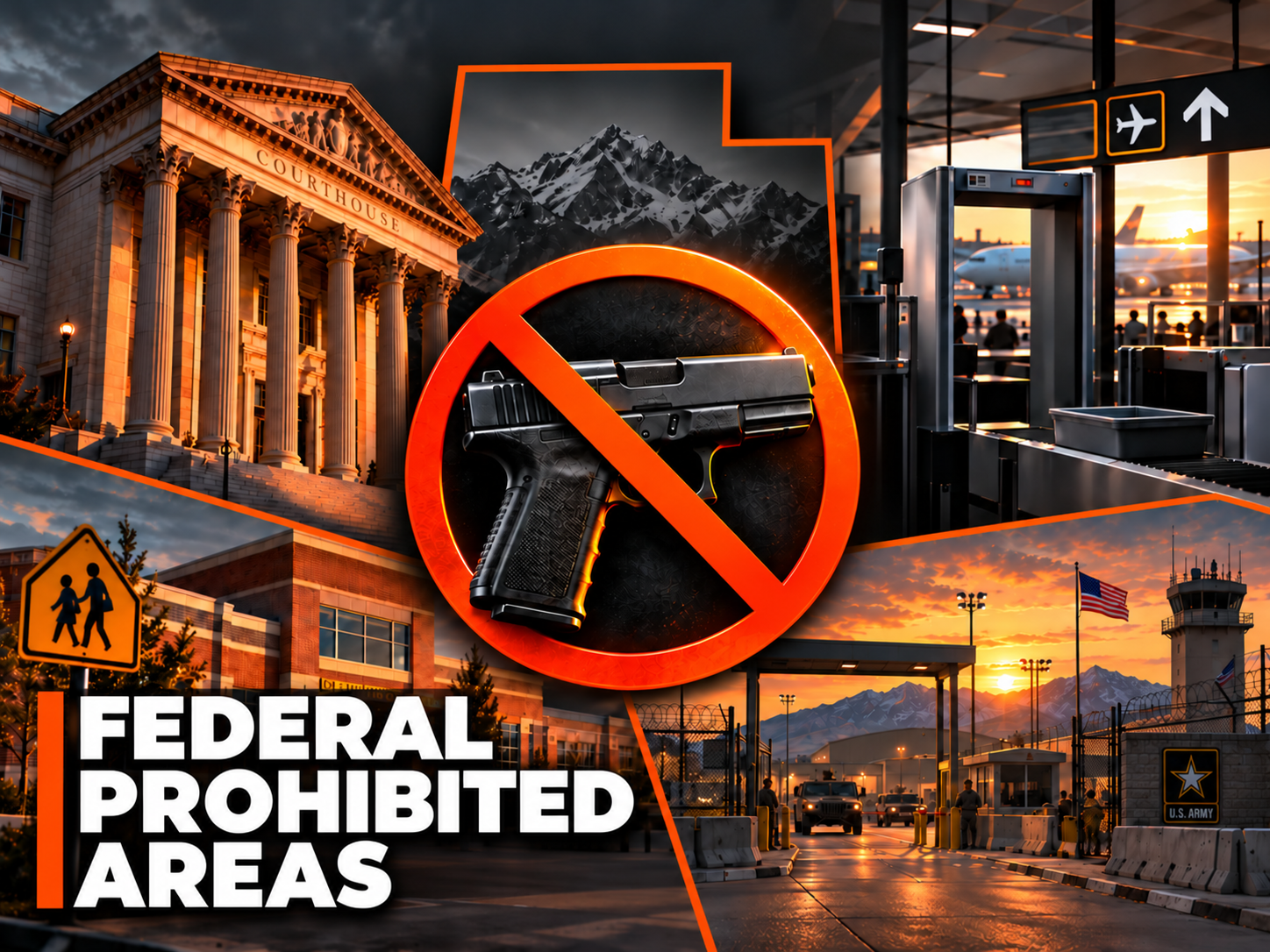
Where Firearms Are Prohibited
Federal Firearm Restrictions
Constitutional carry or having a concealed firearm permit does not allow you to carry in federally prohibited areas. Federal facilities, military installations, and other federal properties have different restrictions depending on the controlling law and agency.
Posted Prohibition Signs
Federal law requires conspicuous prohibition notices at public entrances to federal facilities and federal court facilities covered by 18 U.S.C. § 930. Other federal properties have separate posting requirements. The absence of a sign does not automatically authorize firearm possession.
Prohibited & Restricted Areas
Federal Parking Lots
Firearm restrictions can extend to parking lots owned or controlled by federal agencies. The rules depend on the agency and property. Postal Service and VA property have separate restrictions that can include parking areas.
Federal Buildings & Courthouses
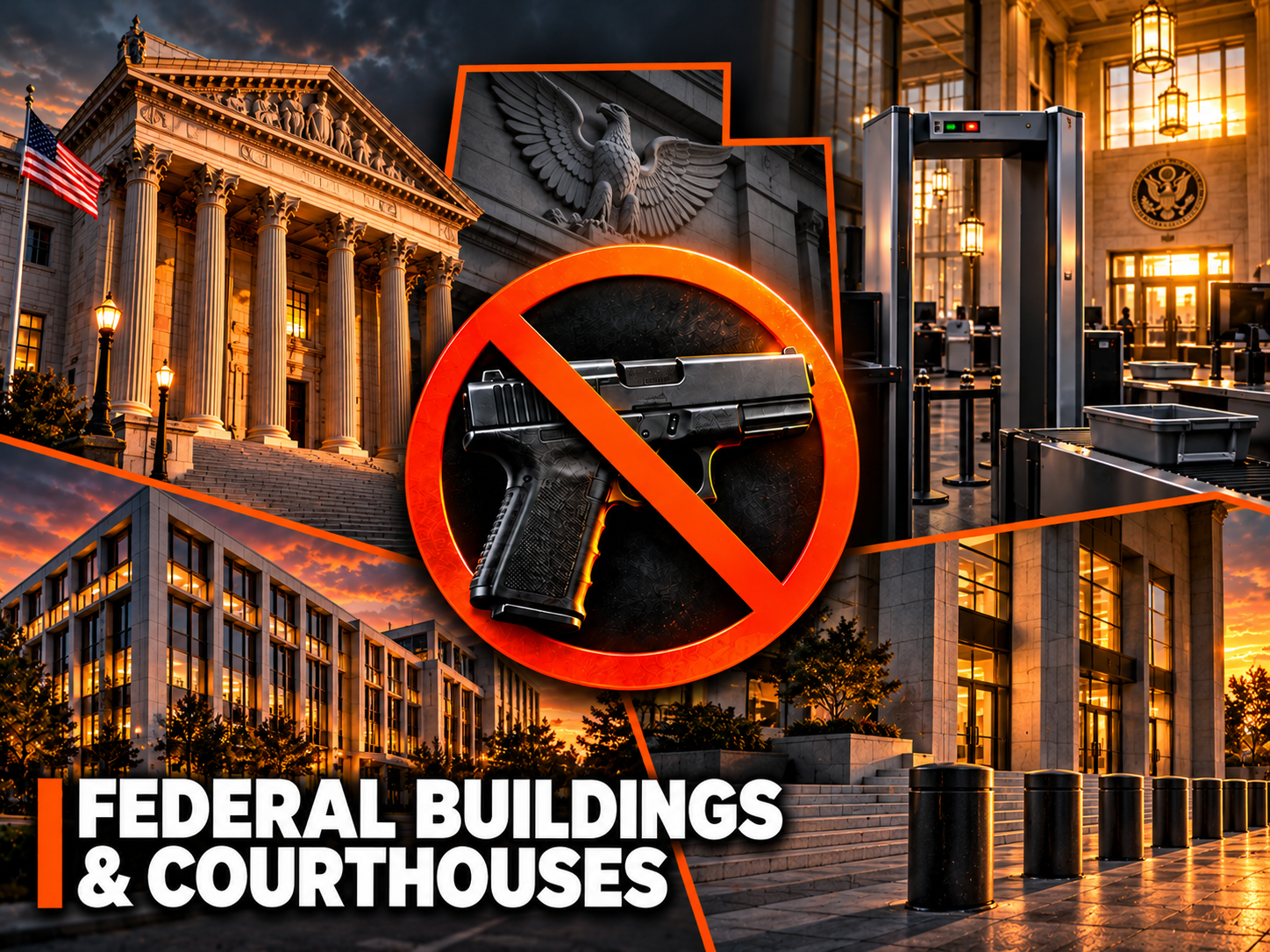
Federal Facility Restrictions
Federal law prohibits firearms and other dangerous weapons inside federal facilities and federal court facilities covered by 18 U.S.C. § 930. Federal law defines which buildings or portions of buildings are covered by these restrictions.
Federal Facility Definition
A federal facility is a building or part of a building owned or leased by the federal government where federal employees are regularly present performing official duties.
Federal ownership or leasing alone does not satisfy the complete statutory definition.
Shared & Rented Buildings
When federal offices occupy only part of a building, the federal facility restriction does not automatically extend to every unrelated business or tenant in the building. Other laws may restrict common areas or additional portions of the property.
Federal Court Facilities
These include courtrooms, judges' chambers, witness rooms, jury rooms, attorney conference rooms, prisoner holding cells, court clerk offices, U.S. attorney offices, U.S. marshal offices, probation and parole offices, and connecting corridors.
Dangerous Weapon Definition
Federal law defines a dangerous weapon by its ability or ready capability to cause death or serious bodily injury.
The definition excludes a pocketknife with a blade shorter than 2½ inches. Other restrictions may still apply.
Statutory Exceptions
- Law enforcement officers and government employees authorized to possess weapons while performing official duties.
- Federal officials and members of the Armed Forces when possession is authorized by law.
- Lawful carrying incident to hunting or other lawful purposes under the statutory exception, with additional federal regulations controlling particular facilities.
Federal court facilities have narrower statutory exceptions than other federal facilities.
Required Posted Notice
Prohibition notices must be conspicuously posted at public entrances. Federal law addresses criminal liability when required notices are missing, including circumstances where the person had actual notice of the restriction.
Federal Penalties
Class A misdemeanor. Up to one year imprisonment and a potential fine up to $100,000.
Class D felony. Up to five years imprisonment and a potential fine up to $250,000.
Class E felony. Up to two years imprisonment and a potential fine up to $250,000.
Additional Federal Penalties
Federal law also addresses deaths occurring during certain prohibited conduct and attacks on federal facilities, with punishment determined under applicable federal homicide and conspiracy laws.
Federal courts may establish additional weapons-related orders and rules for court buildings and their grounds.
Federal Military Installations
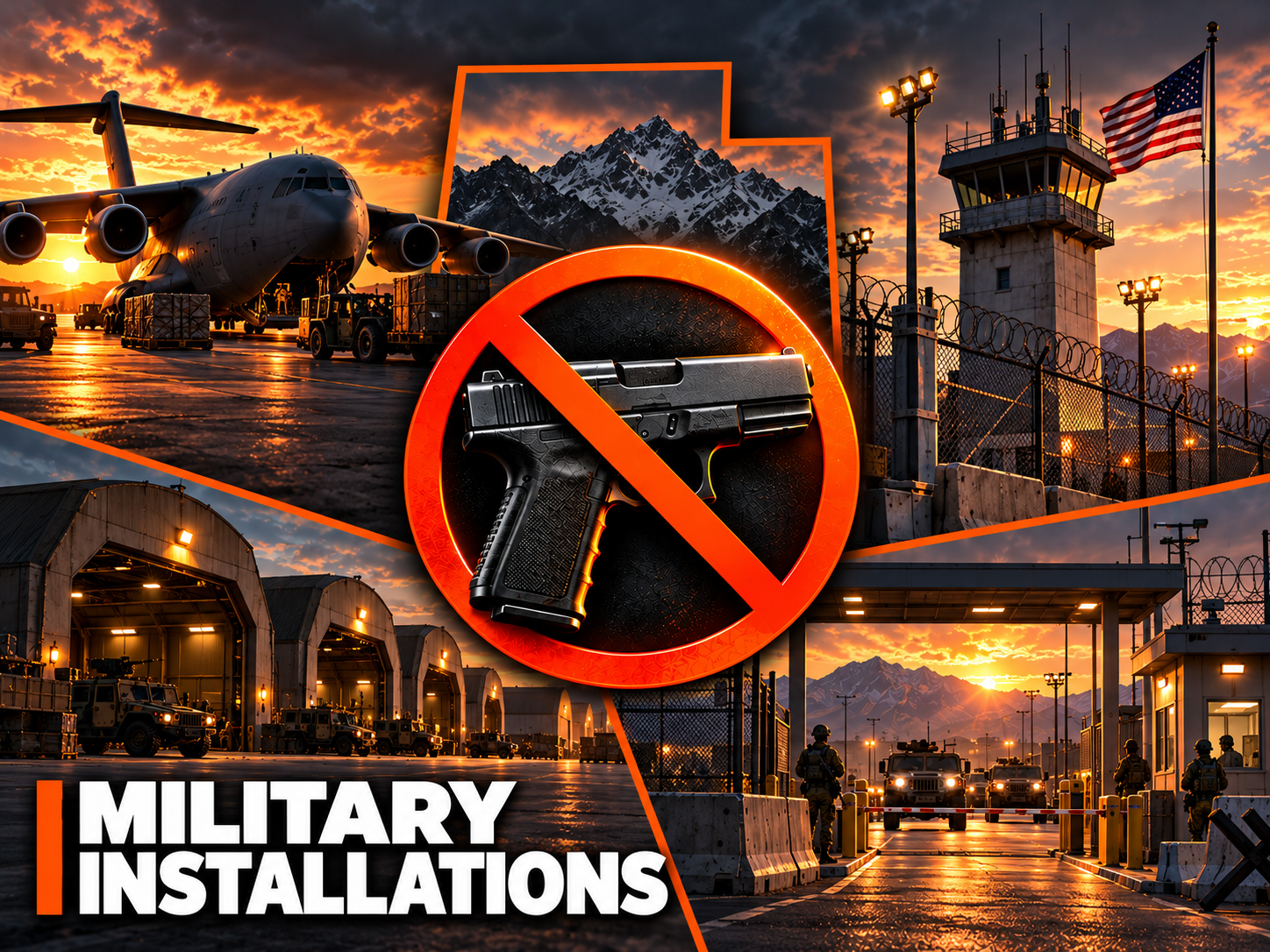
Military Base Firearm Restrictions
Federal military installations restrict personal firearms under military regulations and installation-specific policies. Commanders control firearm authorization and storage procedures on their installations.
Carrying Firearms On Military Bases
Visitors carrying firearms may be required to surrender them for authorized storage or may be denied entry. Commanders may grant exceptions under applicable installation policies.
Contact the installation before arriving with a firearm.
Utah National Guard & Camp Williams
Utah Army National Guard members may have firearm authorization at Camp Williams and other state-controlled installations. Vehicle possession, open carry, and concealed carry depend on National Guard rules and applicable authorization.
State-controlled National Guard property is not automatically governed by the same rules as a federal military base.
Federal Military Locations In Utah
These locations are not an exhaustive directory of restricted military facilities in Utah.
Department Of Veterans Affairs
VA Property Restrictions
Firearms, dangerous or deadly weapons, and explosives are prohibited on property under Department of Veterans Affairs control, except for authorized official purposes.
Where The Restriction Applies
The restriction applies to open and concealed possession and can include VA buildings, grounds, and parking areas.
VA regulations also address knives with blades exceeding three inches, switchblades, hatchets, clubs, brass knuckles, and other weapons.
Penalties & Enforcement
Violations may result in removal, arrest, fines, or imprisonment. The VA penalty schedule identifies a $500 penalty for firearm possession and $300 for certain knives and other prohibited weapons.
Federal law also provides for imprisonment up to six months for certain violations. Official-duty exceptions may apply.
National Parks, Forests & Wildlife Refuges
Outdoor Firearm Carry
Carrying firearms in many national parks, forests, and wildlife refuges follows the firearm laws of the state where the property is located. Federal facilities and other restricted locations remain subject to federal prohibitions.
National Parks
Since February 22, 2010, firearm possession in national parks has been permitted in accordance with the law of the state where the park is located.
State rules for open carry, concealed carry, and vehicle transportation continue to apply.
Federal Park Buildings
Federal facilities such as visitor centers, ranger stations, administrative offices, fee stations, and maintenance buildings may prohibit firearms under federal law.
National Wildlife Refuges
Federal law permits firearm possession, carrying, and transportation in wildlife refuges when the person complies with applicable state and federal laws.
Refuge-specific restrictions and federal facility prohibitions still apply.
Discharging Firearms
Permission to carry a firearm does not authorize discharging it anywhere within a park or refuge.
Hunting, target shooting, and other activities must comply with the applicable federal regulations and location-specific restrictions.
Wildlife Refuge Activity Rules
Federal regulations address hunting; transportation of unloaded, cased, or disassembled firearms on designated routes; scientific wildlife collection; authorized property protection; field trials; and other approved activities.
Crossbows, bows and arrows, air guns, spears, and other non-firearm weapons have separate federal restrictions. The statutory framework also reflects congressional findings regarding Second Amendment protections and historical refuge regulations.
Bureau Of Land Management
Firearms On BLM Land
Firearm possession and carry are permitted on much BLM-administered public land in Utah when consistent with state and federal law.
Firearm Carry
BLM regulations recognize applicable state and local laws unless another federal law or regulation controls. Utah firearm laws continue to apply on BLM lands.
BLM Buildings & Restricted Areas
Federal facilities on BLM land remain restricted under federal firearm laws. Additional restrictions can apply to specific recreation or conservation areas.
Locations With Special Restrictions
Examples of BLM areas identified for additional firearm restrictions include the San Pedro Riparian National Conservation Area in Arizona, Wallace Conservation Forest in Idaho, and Red Rock National Conservation Area in Nevada. Check current restrictions before visiting.
Other Public Land Rules
Federal regulations also address vehicles, aircraft, boats, hunting, fishing, property damage, pollution, littering, sanitation, fires, pets, forest products, and caves.
Post Offices
USPS Firearm Restrictions
Postal regulations prohibit carrying or storing firearms, dangerous weapons, and explosives on USPS-controlled property, except for authorized official purposes.
USPS Buildings, Grounds & Parking
The restriction covers Postal Service buildings, grounds, and parking areas controlled by USPS as provided in postal regulations.
Contract Postal Stations
A postal counter inside a separately owned private business is not automatically subject to the same property-wide restrictions as a USPS-controlled post office.
Other firearm restrictions may still apply.
Property Exceptions & Penalties
Postal regulations contain provisions concerning areas leased exclusively to private tenants and certain sidewalks or paved areas that are physically indistinguishable from public sidewalks.
Violations may result in fines, imprisonment up to 30 days, or both. Other state or federal criminal laws may impose separate penalties.
U.S. Army Corps Of Engineers

USACE Project Lands & Waters
Federal regulations restrict loaded firearms, ammunition, projectile-firing devices, bows, crossbows, and other weapons on applicable U.S. Army Corps of Engineers project lands and waters.
Weapons On USACE Property
USACE manages flood-control and navigation dams, associated waterways, and other federal project property. Restricted areas can include marinas, docks, boat ramps, cabins, and land beyond the immediate dam or shoreline.
Project boundaries may not be fully marked. The first project sign does not necessarily identify the full limits of USACE jurisdiction.
Exceptions Under Federal Regulations
- Authorized federal, state, and local law enforcement officers.
- Authorized hunting or fishing activities, with weapons unloaded when transported between applicable sites.
- Use at authorized shooting ranges.
- Written permission from the District Commander.
Explosives, fireworks, and similar devices require appropriate authorization.
Permission Letters
Individuals requesting permission to carry outside another authorized exception should contact the USACE district responsible for the property.
A concealed firearm permit does not replace required federal authorization. Permission for project lands does not authorize firearms in prohibited federal buildings.
USACE issued guidance dated May 14, 2018, addressing district-level permission requests.
Other Rules & Enforcement
Federal regulations address hunting, fishing, trapping, additional restricted locations, and designated activity requirements.
Covered violations may result in imprisonment up to six months or a fine up to $5,000. State and local laws also apply where required by federal regulations.
Corps personnel have enforcement authority within applicable project boundaries. Informal enforcement practices do not override federal law.
Sample USACE Permission Request
National Military Cemeteries
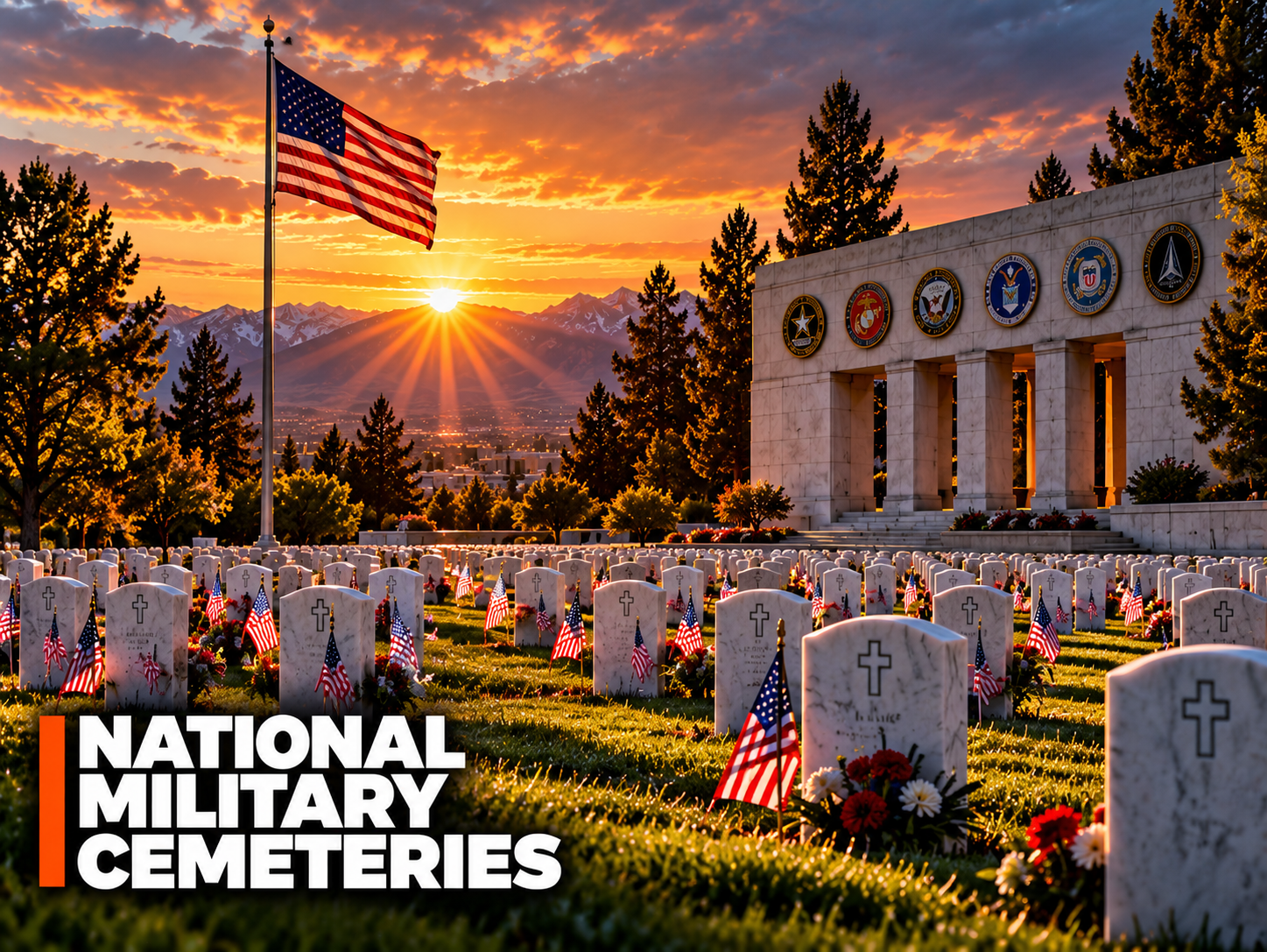
Firearm Possession Restrictions
Federal regulations restrict firearm possession at Army National Military Cemeteries without advance written permission from the Executive Director.
Firearms & Authorization
Firearm possession requires advance written authorization under the applicable regulations. Exceptions include certain law enforcement and military personnel performing official duties, under applicable authorization requirements.
Covered National Cemeteries
The regulations cover:
- Arlington National Cemetery.
- U.S. Soldiers' and Airmen's Home National Cemetery.
Visitors must also follow cemetery conduct and decorum requirements.
Tribal Land
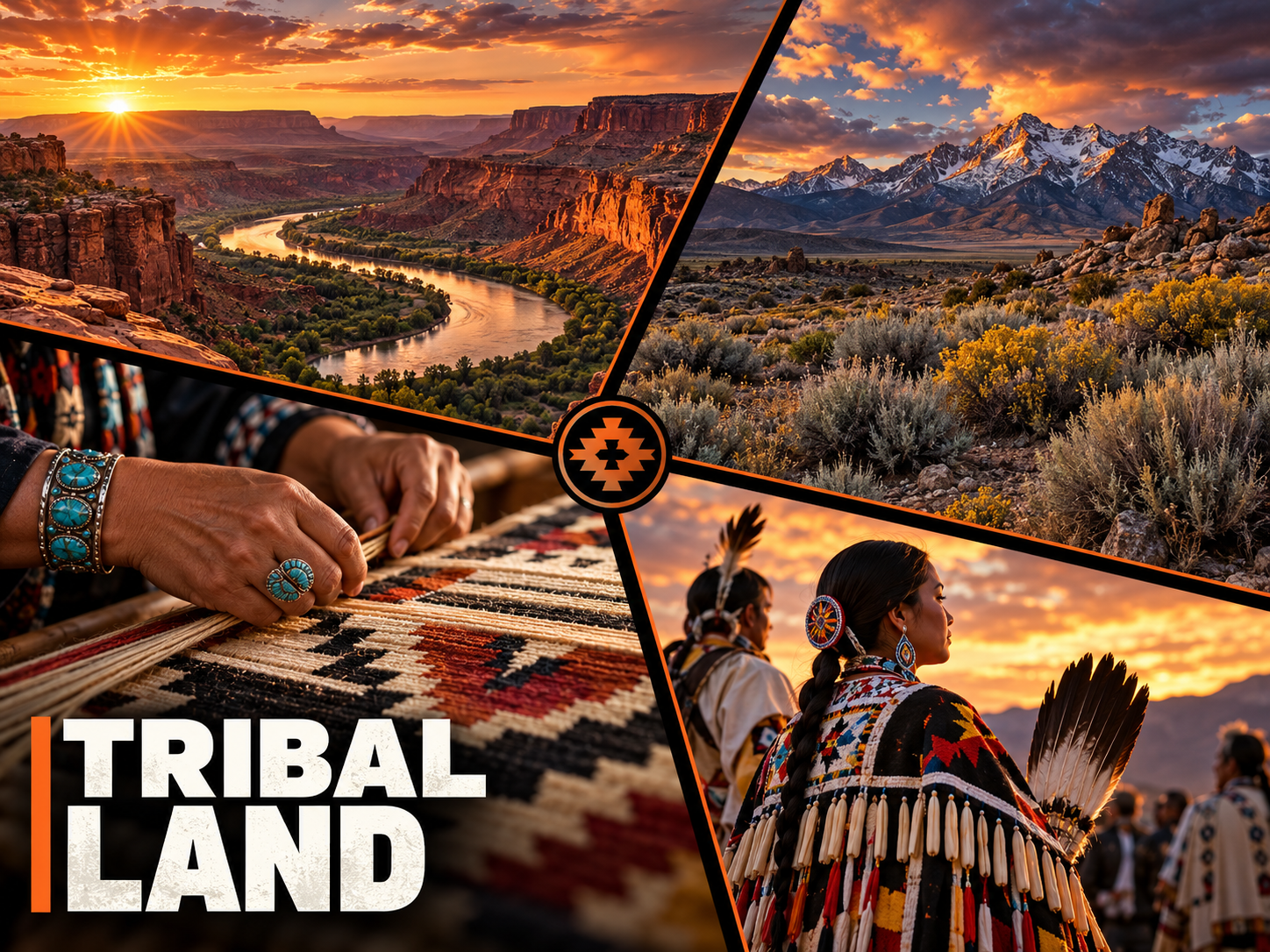
Tribal Firearm Laws
Federally recognized tribes may establish firearm regulations for their lands. A concealed firearm permit recognized by the surrounding state does not necessarily authorize carrying under applicable tribal regulations.
Tribal Jurisdiction & Firearm Permits
Firearm restrictions can affect roads passing through reservations. Tribal police may coordinate with state and federal law enforcement, and federal court decisions recognize certain investigative and detention authority involving nonmembers.
The Bureau of Indian Affairs published a list of 575 federally recognized tribal entities in January 2026.
Applicable Federal Laws & Regulations
- 18 U.S.C. § 930 — Federal Facilities
- 18 U.S.C. § 3571 — Federal Fines
- 18 U.S.C. § 3581 — Imprisonment
- 41 CFR § 102-74.440 — Federal Property Weapons
- 38 CFR § 1.218 — VA Property Rules
- 38 U.S.C. § 901 — VA Enforcement
- 54 U.S.C. § 104906 — National Parks
- 36 CFR § 2.4 — National Park Weapons
- 50 CFR § 27.42 — Wildlife Refuge Firearms
- 50 CFR § 27.43 — Other Weapons
- 43 CFR § 8365.1-7 — BLM State & Local Laws
- 39 CFR § 232.1 — Postal Property
- 36 CFR § 327.13 — USACE Firearms
- 36 CFR § 327.8 — USACE Hunting & Fishing
- 36 CFR § 327.25 — USACE Enforcement
- 36 CFR § 327.26 — State & Local Laws
- 32 CFR § 553.33 — Military Cemeteries
- USACE — Firearms Permission Guidance
- USPS — Firearm Prohibition Poster
- National Park Service — Firearms Information
- Arlington National Cemetery
- Soldiers' & Airmen's Home Cemetery
- Bureau Of Indian Affairs